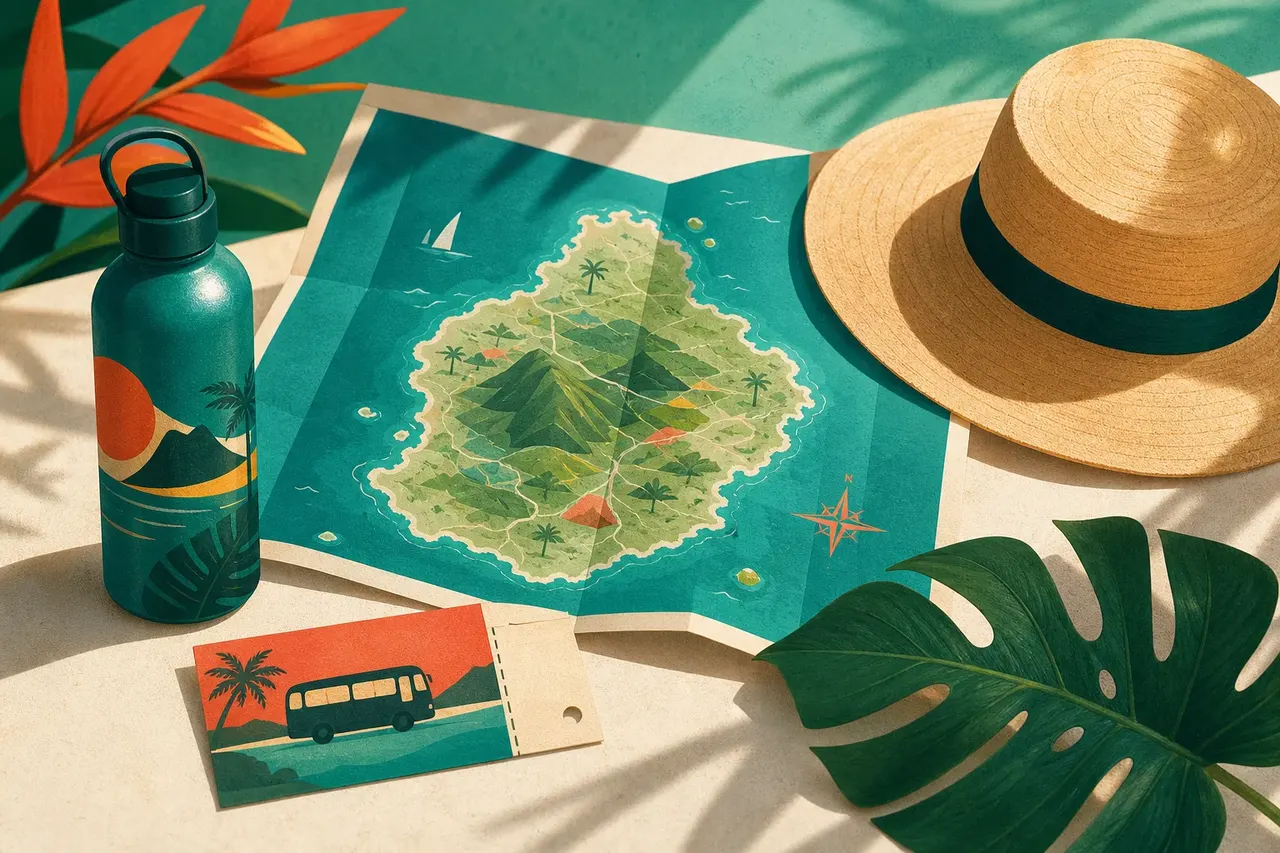
The basics come down to four items: a mat or a large sheet, a rigid cooler with ice packs, a strong bin bag, and far more water than you think. In the tropics you'll easily drink two litres per person over a beach day, and most Mauritian spots have no drinking water at all. A rigid cooler isn't a luxury: a soft bag lets the heat in within an hour, and the mayonnaise in a chicken rougaille is unforgiving.
Then comes comfort. A parasol is often pointless on casuarina beaches — the shade is already there — but essential at Pointe d'Esny or Le Morne, where it sits back from the sand. If you do bring one, bring proper pegs: the afternoon easterly flattens supermarket models without fail. Add water shoes if you're heading for a basalt coast like Roches Noires, and a light windbreaker for high-altitude spots like La Nicolière or Alexandra Falls, several degrees cooler than the coast.
For a barbecue, charcoal isn't available on site. Buy it at a supermarket or the local shop the day before, along with something to light it. Disposable grills work but heat poorly; a small portable brazier lasts for years and cleans up in two minutes. Above all: never light a fire directly on the sand or against casuarina roots, which run close to the surface and smoulder slowly without anyone noticing.
The three classic omissions, in order: the corkscrew and bottle opener, the second bin bag (one for rubbish, one for returnable bottles), and a minimal first-aid kit — antiseptic, plasters, antihistamine. Sea urchins on rocky stretches and late-afternoon mosquitoes do more damage than anything else, and none of these spots has a pharmacy within twenty minutes.
Last point, and the most important: everything you bring leaves with you. Mauritius's public beaches are cleaned by overstretched council teams and by the regulars themselves. A bin bag in the boot and ten seconds of picking up before you leave is the only reason Mont Choisy or Flic en Flac are still pleasant on a Sunday evening.