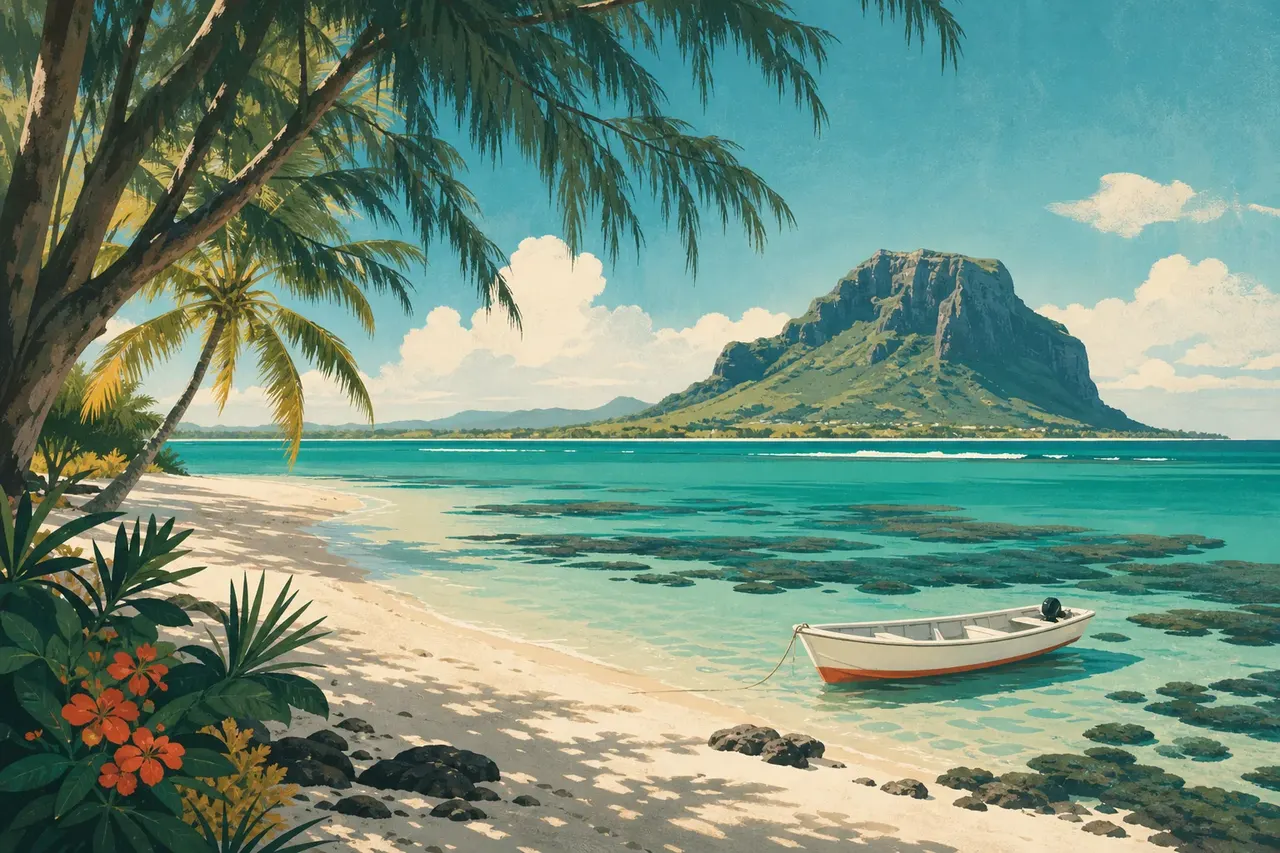
Mauritius is swept year-round by the south-east trade winds. In practice: the east and south-east coasts take the wind head-on, especially from May to October and especially in the afternoon, while the west coast stays sheltered by the central highlands. That's the only rule you need. When Belle Mare is unusable at 2pm, Flic en Flac is flat as a lake at that very moment, forty minutes' drive away.
The corollary is timing. On the east coast the wind usually gets up around midday: a picnic at Belle Mare, Palmar or Poste Lafayette happens between 7am and noon. After 1pm the sand flies and the parasols go down. In the west it's the reverse: mornings are calm but unremarkable, and it's late afternoon, as the sun drops over the lagoon, that Flic en Flac or La Preneuse really come into their own.
The tide matters less than people think for a picnic, except at two kinds of spot. Very flat beaches such as Pointe d'Esny or Blue Bay see the lagoon retreat a long way at low tide, which is perfect with children but disappointing if you came to swim. Conversely, rocky coasts like Roches Noires or Albion are easy to cross at low tide and become uncomfortable at high tide. Tide times are published daily by the meteorological service.
On seasons, austral winter (May to October) offers the best compromise: less rain, fewer mosquitoes, cooler but perfectly swimmable water, and crisp light. Austral summer (November to April) is hotter and more humid, with short violent late-afternoon downpours — plus the cyclone season from January to March, during which you should check the weather advisories before going anywhere.
One last habit, often forgotten: on very hot days, the interior beats the coast. La Nicolière, Alexandra Falls or the Plaine Champagne plateau run five to eight degrees cooler than the lagoon, with dense shade and no crowds. It's the Mauritian move in February, when the beach turns into an oven by 10am.